
What Makes a Playground Truly Effective?
Designing Spaces That Build Strength, Movement, and Community
When most people think about a playground, they picture slides, swings, and a place for kids to burn off energy.
But the truth is—not all playgrounds are created equal.
Some get used every day, become the heart of a community, and support real physical and social development. Others look nice, but sit empty more often than they should.
So what’s the difference?
It comes down to intentional, research-driven playground design.
The Problem with Standard Playgrounds
For years, many playgrounds followed the same formula:
- A structure
- A slide
- Maybe a few climbers or swings
And while those elements still matter, research shows that traditional playground designs often don’t fully engage users or encourage enough physical activity.
In fact, adding more diverse play elements can significantly increase both usage and activity levels.
That means the goal shouldn’t just be to install a playground—it should be to design a space people actually want to use.
The Shift: From Equipment to Experience
Modern playground design has evolved.
Today, the most successful spaces are designed around one core idea:
👉 How people move, interact, and engage with the environment
That includes:
- Encouraging a variety of movement types
- Creating open-ended play
- Designing for multiple age groups
- Making spaces inviting for the whole community
This is where effective playground design starts to separate average projects from truly impactful ones.

Key Elements of Effective Playground Design
The best playgrounds aren’t random collections of equipment—they’re carefully planned systems.
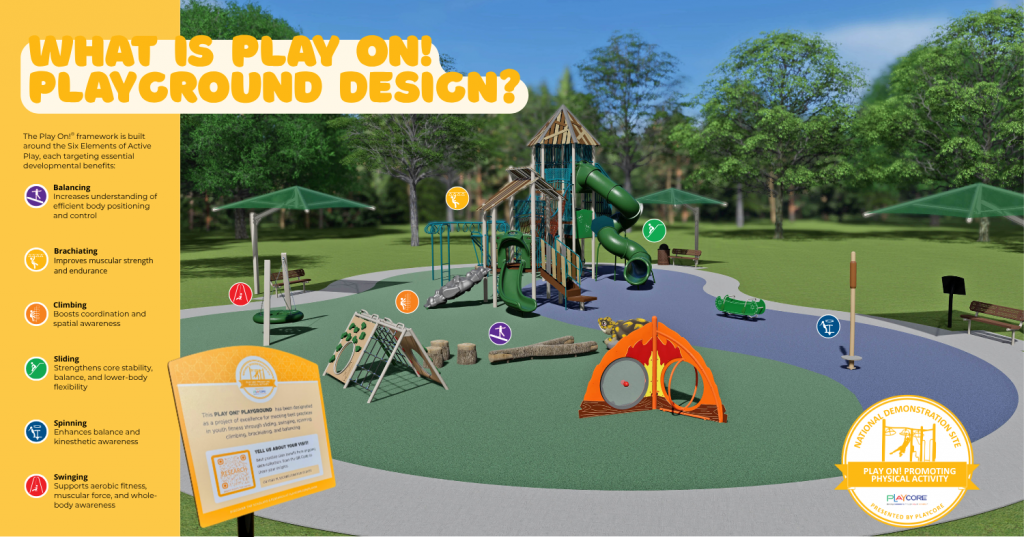
Some of the most important elements include:
🔹 Climbing – Builds strength and confidence
🔹 Spinning – Supports balance and coordination
🔹 Brachiating – Develops upper body strength
🔹 Balancing – Improves stability
🔹 Sliding & Swinging – Encourages fun and repeat use
The more variety a playground offers, the more people use it—and the more active they are while they’re there.
The Role of Research in Playground Design
Here’s where things really start to separate.
Anyone can choose commercial playground equipment.
But designing a space that truly performs requires evidence-based decision making.
Programs like the National Demonstration Site (NDS) initiative focus on creating research-backed playground environments that are measured over time.
Communities using this approach can:
- Track park usage
- Measure physical activity
- Understand real community impact
In other words, you’re not guessing—you’re designing with data.
See how this works in real projects >>
Five Research-Based Playground Design Strategies
The most effective playgrounds are built around key focus areas:
✔ Inclusive play
✔ Youth physical activity
✔ Nature-based play
✔ Playful pathways
✔ Adult outdoor fitness
These strategies help communities create spaces that deliver long-term value and higher engagement.
Why Design and Equipment Both Matter
A great playground isn’t just about what you install—or just how you design it. It’s both.
Even the best playground design can fall short if the equipment doesn’t hold up over time. And high-quality commercial playground equipment won’t reach its full potential without a thoughtful layout.
That’s why successful projects focus on:
- Intentional playground design
- Durable, high-quality materials
- Long-term value backed by strong warranties
When these come together, you get a space that performs for years.
What to Look for in Commercial Playground Equipment
Not all playground equipment is created equal.
When planning a space that’s meant to last, here’s what matters:
🔹 Durability & Materials
Choose equipment that resists wear, weather, and heavy use
🔹 Warranty & Long-Term Protection
A strong warranty reflects product quality and protects your investment
🔹 Safety & Compliance
Make sure everything meets current playground safety standards
🔹 Design Compatibility
Equipment should support the overall playground design—not fight against it
🔹 Proven Performance
Look for equipment that performs well in real-world installations
Community Impact of Well-Designed Playgrounds
When a playground is done right, it becomes more than a place to play.
It becomes a space that:
- Brings families together
- Encourages healthier lifestyles
- Supports childhood development
- Creates lasting community value
And most importantly—it gets used.
Frequently Asked Questions About Playground Design
What makes a playground effective?
An effective playground combines thoughtful playground design with a variety of movement-based activities and durable equipment that encourages consistent use.
Why is playground design important?
Playground design determines how a space is used. A well-designed playground increases physical activity, improves user experience, and supports long-term community value.
What should you look for in playground equipment?
Look for durability, strong warranties, safety compliance, and equipment that fits into a larger playground design plan.
How do you design a successful playground?
Focus on movement variety, inclusive design, high-quality equipment, and research-based planning strategies.
Let’s Design Something That Works
If you’re planning a playground or park project, the design phase is where everything comes together.
We help communities across Alabama, Louisiana, Mississippi, and the Florida Panhandle create effective, durable playground spaces backed by real experience and research.
