
Recess Isn't One Game: What 2026 Research Says About Designing Playgrounds for Every Kid
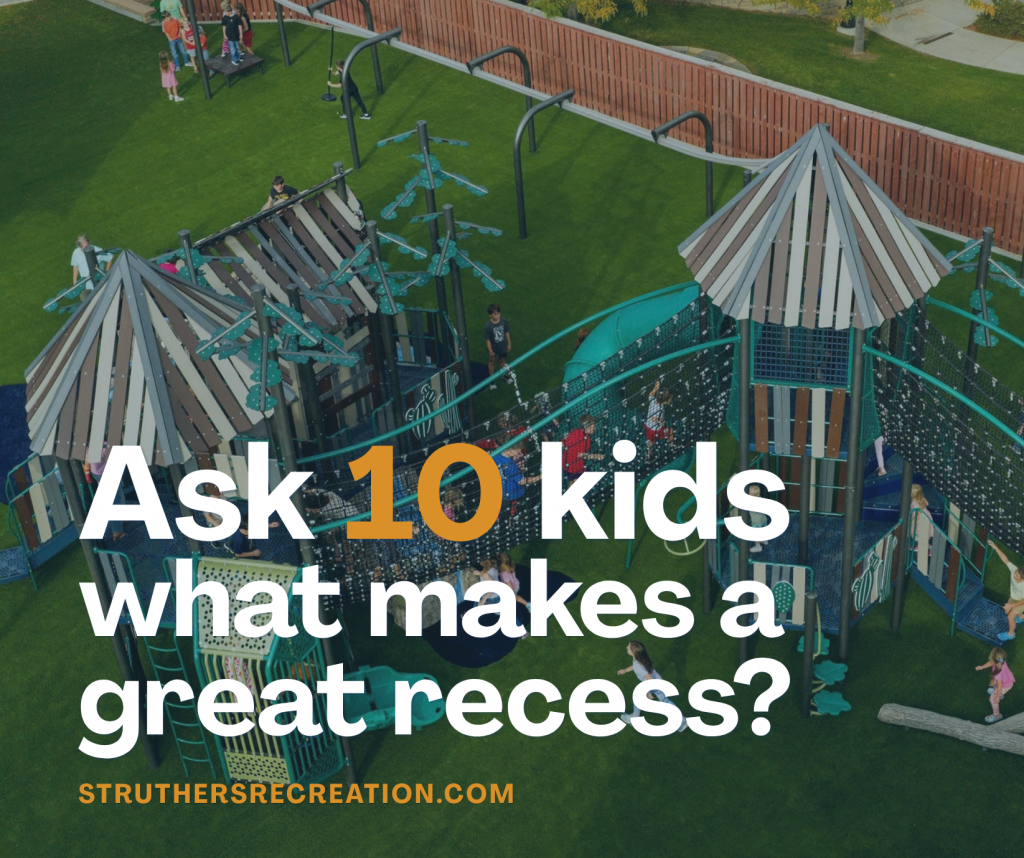
Ask ten kids what makes a great recess and you'll get ten answers. The climber. The tag game. A bench with a friend. A quiet spot under a tree. The newest research on recess playground design says a good playground makes room for all of them, and doesn't sort kids into separate worlds to do it.
What the 2026 research says about inclusive school playground design
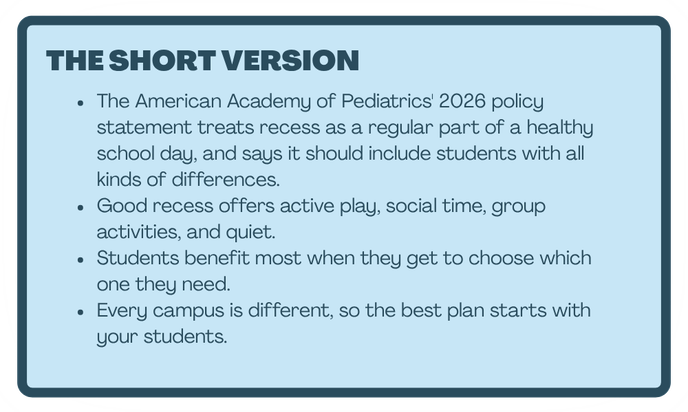
The American Academy of Pediatrics' 2026 policy statement backs recess as a regular part of school life. It says recess shouldn't be taken away as a consequence or reclaimed for classroom time. It also calls for recess settings that welcome students with physical, mental, emotional, social, and developmental differences.
For anyone planning a schoolyard, the practical message is variety. Recess should include active free play, time to socialize, group activities, and quiet time. Students should also help shape the space they use every day.
That changes where a design conversation starts. Instead of a list of equipment, try a list of questions:
- Where do students gather?
- Where can they move at different speeds and intensities?
- Where can a child play alone, and where can they play with a crowd?
- Which spots invite kids who don't think of themselves as athletes?
The same playground won't work everywhere
A peer-reviewed study of schoolyard renovations in Tacoma shows why. Moderate-to-vigorous physical activity went up after the renovations. But the busiest spots weren't the same from campus to campus. At one school, grassy areas drew the most activity. At another, it was the newly marked paved areas.
Same goal, different answers. Climate, grade levels, existing landscape, and student preferences all shape what works. A template can't tell you that, but the kids on your campus can.
Choice is the design feature
Choice is where recess gets its developmental value. When a student picks a route, a friend, a challenge, or a place to take a break, they're practicing decisions. A schoolyard supports that when it offers several good ways to take part. Picture ground-level and elevated routes for climbing and moving, open space for games kids invent themselves, and imaginative settings where a stump becomes a stage or a ship. Add seating built for conversation, a few sensory elements, and clear pathways that tie it all together so kids can see their options and find their way to them.
Include spots where a hesitant student can watch before joining. That's an easy way in, and it costs a bench and a good sightline. In the Gulf South, where summer heat shapes when kids can be outside, a shaded place to watch might be the most-used spot on the campus.
Movement without a scoreboard
When one big game takes up most of the yard, it can quietly limit who plays. Look instead for a range of movement: walking, balancing, climbing, swinging, rolling, chasing, dancing, or working out a new route. Small zones can support focused or cooperative play, and open areas leave room for games nobody has invented yet.
The Tacoma study also found that renovated schoolyards were used more after school hours, especially by groups of children. Plan a welcoming, flexible space and it can serve the whole neighborhood, not just the school day.
Inclusive recess: room to belong
Belonging grows when kids can join in without proving they fit a narrow idea of athletic ability. A 2025 Oregon State University study of more than 1,000 third- through fifth-graders found that sense of belonging increased over time in schools with organized recess support. Students called recess a place for connection, and they were honest that conflict and exclusion happen there too.
Design can't fix every social challenge, but it can set better conditions. Give students seating that invites conversation, gathering spaces that don't favor one activity, and routes that link the major play areas. Give adults clear sightlines so they can step in when they're needed.
Students also know what they want. In a 2026 collaborative recess project in Ontario, students were asked what recess should look, feel, and sound like. They talked about inclusion, fairness, fun, time outdoors, and a mix of new and familiar activities. Those answers became low-barrier activities with several ways to join in.
A school playground planning checklist
Before you finalize a plan, ask:
- Can students choose between active, social, imaginative, and restful experiences?
- Are there ways to take part at different physical and sensory levels?
- Are key areas connected by compliant, accessible routes?
- Is there room for individual play, small groups, and big groups?
- Have students, educators, families, and support staff had a say?
- Can staff see the space well enough to respond to conflict, exclusion, or maintenance needs?
A great schoolyard isn't the one with the most equipment. It's the one where the most kids find something that's theirs. That's good for recess, and it also supports learning, friendships, and a stronger connection to the community.
If your campus is weighing a new playground or a renovation, we're happy to talk through what these findings could look like on your site. Start the conversation with our team.
