
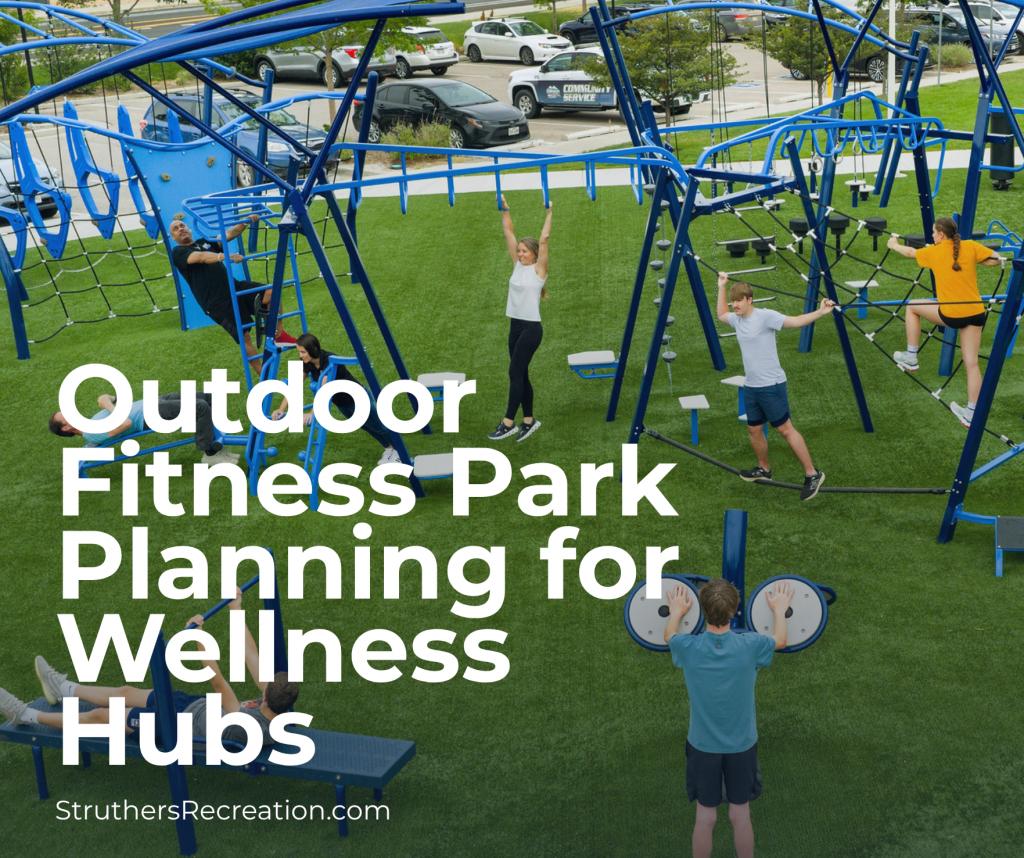
From Equipment to Wellness Hub: Rethinking Outdoor Fitness Park Planning
A row of workout stations doesn’t make a wellness destination. Outdoor fitness park planning now starts with a broader question: How can a park help people move, connect, and build healthier routines over time?
That shift reflects a larger change in parks and recreation. Recent guidance from public health agencies and park professionals points toward connected, inclusive places that combine physical activity with social connection, access, and programming. The equipment still matters—but it works best as one part of a complete community resource.
What the latest findings mean for park planners
The National Recreation and Park Association’s 2025 Engagement with Parks Report found that 82% of respondents considered health and well-being a highly essential goal for local park and recreation agencies. The report also found that 92% believed local and state governments should sufficiently fund those agencies.
That public support creates an opportunity for parks departments to make a stronger case for fitness projects. Instead of presenting outdoor equipment as a standalone amenity, frame it as infrastructure that supports health, social connection, and equitable access to activity.
The Centers for Disease Control and Prevention makes a similar point in its 2026 community-design guidance. Parks work best as part of connected, activity-friendly neighborhoods, with routes that help people walk, roll, or bicycle to everyday destinations. A fitness area located beside a trail, recreation center, playground, or transit stop can serve more people than an isolated installation.
Community park wellness design starts with people
Community park wellness design means planning around local needs before selecting equipment. Begin with questions such as:
- Who already uses the park—and who does not?
- Are older adults, teens, families, and people with disabilities represented in the planning process?
- Can residents reach the site by walking, rolling, biking, or transit?
- What barriers make activity difficult, including cost, transportation, heat, unfamiliarity, or lack of social support?
The answers should shape the layout, equipment mix, routes, seating, shade, lighting, signage, and nearby amenities. They should also influence how the department measures success.
A strong design can support multiple activity levels without making beginners feel out of place. Include space for warmups, stretching, balance work, strength training, and low-impact movement. Clear instructions and visible connections to walking loops can help residents understand how to use the area without requiring a gym membership or formal training.
For communities building a project in phases, the Outdoor Fitness Funding Promo can help teams explore funding support while developing a broader project plan. Teams can also review the resource when connecting funding decisions to community goals.
How to choose outdoor fitness equipment for parks
The best outdoor fitness equipment for parks supports a well-rounded experience rather than a collection of unrelated stations. Consider equipment that addresses aerobic movement, balance, core strength, flexibility, and muscle development. Then organize those elements into a logical flow that works for individual users and small groups.
Location matters just as much as selection. Place equipment where people can see it from a trail, recreation building, or gathering area. Visibility can make the space feel more welcoming and help residents understand that it is intended for everyday use—not only for experienced athletes.
Plan for the full site, too. Compliant routes, firm accessible surfaces, seating, drinking water, shade, wayfinding, and convenient restrooms can influence whether people return. The CDC specifically recommends considering features such as walking loops, benches, shade, accessible routes, and community input when improving parks and recreation areas.
Health and wellness programming in parks turns equipment into a wellness hub
Equipment creates opportunity. Programming creates momentum.
Health and wellness programming in parks might include walking groups, introductory circuit classes, balance sessions for older adults, family movement events, fitness demonstrations, or partnerships with local health organizations. Programs should be affordable or free when possible, culturally relevant, and scheduled at times that match how residents use the park.
The City of Sioux Falls offers a useful current example of this approach. In June 2026, its parks and public health departments announced that community health assessment data would guide future investments in parks, trails, and recreation programs. That kind of partnership helps agencies connect capital improvements to documented community needs.
Programming also gives parks departments something to evaluate beyond installation completion. Track participation, repeat use, demographic reach, partnerships, and resident feedback. Use that information to adjust schedules, add instruction, or improve outreach.
GameTime’s outdoor fitness resources emphasize the same complete-project approach: align equipment, layout, programming, outreach, and measurement around real community use. Teams can also review the Outdoor Fitness Funding Promo as they build a funding strategy for a broader wellness project.
The practical takeaway for community leaders
Treat an outdoor fitness area as a platform, not a product. Start with community health goals, connect the site to existing park assets, design for different abilities and experience levels, and budget for programming and evaluation from the beginning.
The strongest projects make activity visible, approachable, and convenient. They give residents more than equipment: they create a place to move, meet neighbors, build confidence, and return often. That is how a park can grow from an equipment site into a true wellness hub.
Ready to plan the next step? Let's Talk

