
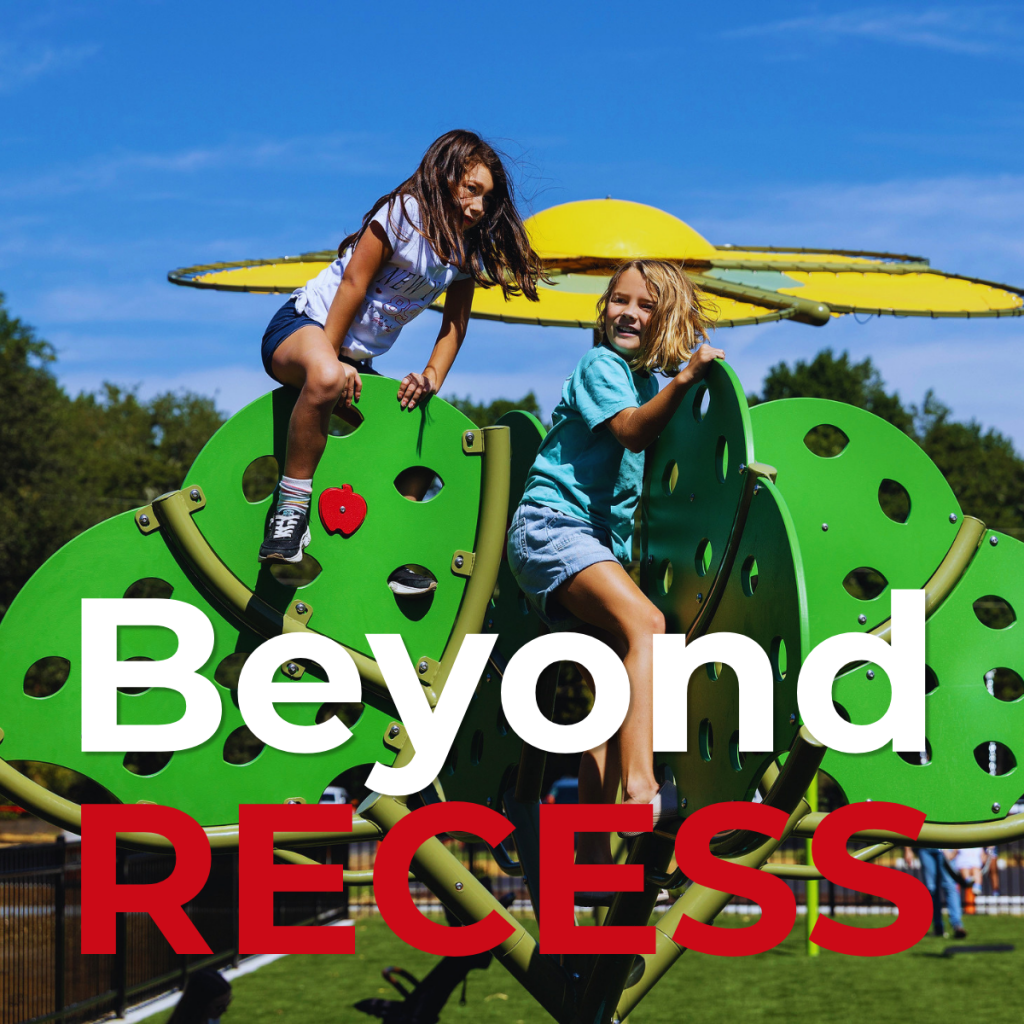
Beyond Recess: How Community Schoolyard Transformations Support Physical Activity After the School Day
A community schoolyard transformation can help a schoolyard do more than serve one recess period. With the right plan, it can become a community asset that supports movement, play, and connection before and after the school day.
That’s the opportunity behind redesigning outdoor space so it works for students during school hours and for families, youth groups, and neighbors afterward.
Why shared-use school grounds after school matter
Many children don’t consistently reach the recommended 60 minutes of daily moderate-to-vigorous physical activity. Recent national data found that only about 1 in 5 school-aged children reached that level every day during the prior week. That makes every accessible opportunity to move more valuable—including the hours when school is no longer in session.
A shared-use approach can help schools and communities make better use of existing land. Through a clear agreement, a schoolyard might support walking, informal games, family recreation, youth programs, or organized activities after dismissal and on weekends.
The physical improvements matter, but access and programming matter, too. A redesigned space won’t reach its full potential if families don’t know when they can use it, how to enter it, or what activities are available.
What makes a schoolyard redesign for physical activity effective?
The strongest projects plan for different ages, abilities, interests, and activity levels instead of relying on one central play structure. A well-rounded layout may include:
- Play equipment that encourages climbing, balancing, sliding, and imaginative play
- Open areas for running, group games, and flexible programming
- Courts or marked spaces for basketball, four square, soccer, or other activities
- Walking loops that support movement at different speeds
- Seating areas for caregivers, teachers, and community members
- Shade, trees, and gathering areas that make outdoor use more comfortable
- Accessible routes and play features that support participation across abilities
Recent schoolyard research reinforces the value of looking closely at how children actually use outdoor spaces. One 2025 study found that features such as colorful equipment, equipment condition, and distance from roads were associated with children’s activity patterns. Another study found that students reported higher physical activity on courts and fields than on play structures alone.
The takeaway is straightforward: variety gives more children a reason to move. It also gives schools more options for physical education, recess, clubs, and community programming.
Designing after-school physical activity spaces for children
A successful transformation starts with observation and listening. Ask students where they play now, what areas they avoid, and what they wish they could do outdoors. Invite families, teachers, recreation staff, and community organizations to identify barriers such as limited shade, poor circulation, inaccessible routes, or a lack of flexible activity space.
Then connect the design to realistic after-school uses. For example, a walking loop can support family activity and school wellness programs. A multi-use court can host informal play, youth leagues, and community events. Open lawn or flexible surfacing can accommodate games that change from season to season.
Accessibility should be part of the concept from the beginning, not added after the main decisions are made. Plan continuous routes, usable gathering areas, inclusive play opportunities, and clear transitions between activity zones. The goal is a schoolyard that invites participation rather than separating children by ability.
Weather and maintenance deserve equal attention. Shade, durable materials, drainage, lighting where appropriate, and a practical inspection plan can determine whether a space remains useful throughout the year.
How schools can turn design into daily use
Physical improvements work best when paired with a simple operating plan. Schools and community partners should define:
1. Who can use the space and during which hours
2. Which entrances, restrooms, and activity areas are available
3. How programs will be scheduled and communicated
4. Who handles routine care, inspections, and reporting
5. How the team will measure participation and adjust the plan
The Centers for Disease Control and Prevention identifies family and community engagement, joint-use agreements, and before- and after-school opportunities as parts of a comprehensive school physical activity approach. That means a transformed schoolyard should be treated as both a physical project and a community partnership.
A practical starting point
Begin with a site assessment, usage calendar, and community conversation. Identify the activities the current space supports, the activities it prevents, and the times when the property sits unused. From there, create a phased plan that matches available funding and local priorities.
A phased project might start with access improvements, markings, seating, and flexible activity zones before expanding into play equipment, shade, landscaping, or additional amenities. Tracking attendance, age groups, activity types, and community feedback can help demonstrate value and guide future improvements.
A community schoolyard transformation can extend the benefits of recess into the hours when families and neighbors need places to move, play, and connect. By combining shared-use planning, varied activity zones, inclusive access, thoughtful maintenance, and community programming, schools can create after-school spaces that serve more people more often. To discuss a project for your school or community, Contact Us
