
Designing Parks for All Ages: What 2026 Research Reveals About Intergenerational Physical Activity
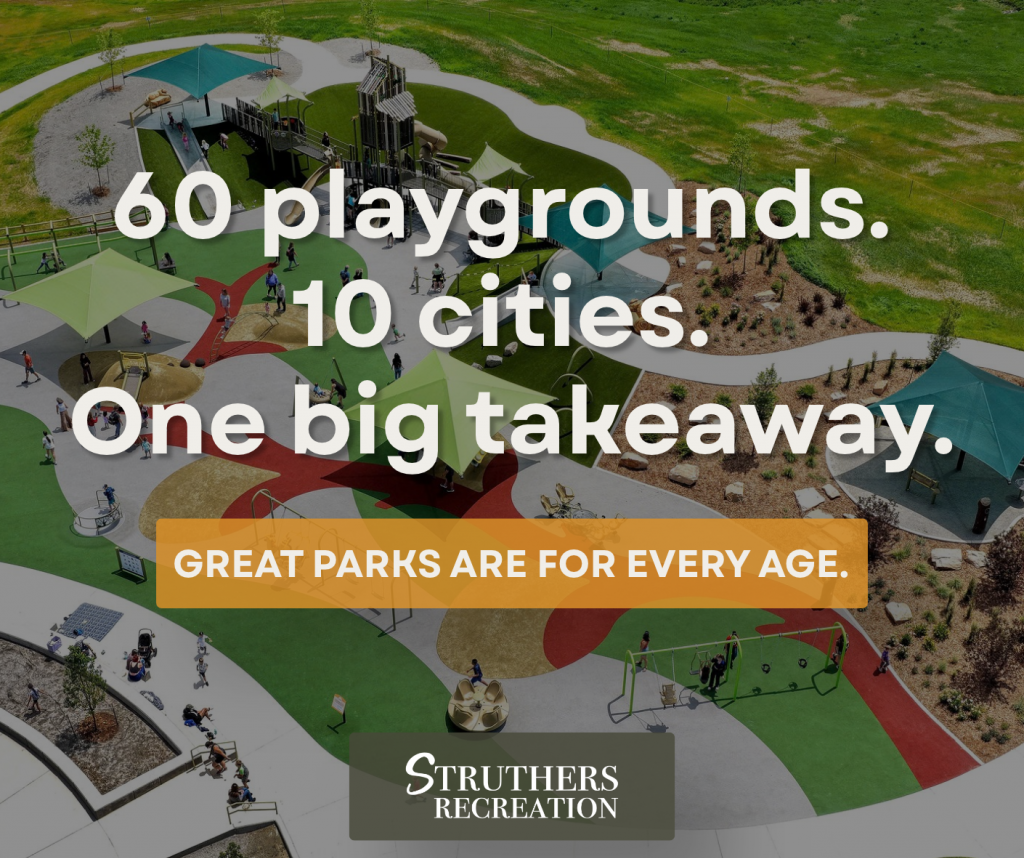
A 2026 study of 60 playgrounds across 10 U.S. cities found that the right site features can increase both playground use and moderate-to-vigorous physical activity for children, teens, adults, and older adults. That finding gives intergenerational playground design a clearer direction: build places that invite every generation to move, participate, pause, and connect—not simply spaces where adults watch children play.
What the 2026 playground study found
The study, published in *Public Health*, used direct observation to examine how people of different ages used public playgrounds. Researchers found that certain elements were associated with greater use and higher physical activity across age groups.
For children, swings and water play stood out. For users of all ages, climbers, berms, boulders, mature trees, restrooms, and picnic tables were linked with increased use and physical activity.
The broader lesson is important: activity doesn’t come from play equipment alone. The surrounding park infrastructure can determine whether people stay, move, and return.
That supports a more complete approach to intergenerational play, where the playground becomes one part of a connected recreation environment.
Playground design for all ages starts with shared reasons to stay
A park designed for children alone may leave teens, caregivers, and older adults on the perimeter. Playground design for all ages creates overlapping opportunities instead.
Consider a layout with a climber near natural landforms, a walking loop connected to the play area, picnic tables with clear sightlines, and comfortable places to rest. A grandparent might walk the loop, help a child navigate a challenge, and then join a conversation at a table. A teenager might use the same space for climbing, informal exercise, or social time.
The goal isn’t to make every feature appropriate for every person. It’s to create enough variety that different users can find a meaningful way to participate in the same park.
A 2026 landscape architecture session on cross-generational parks emphasized the importance of circulation, active caregiver participation, open-field programming, and equipment that supports multiple generations. Those ideas reinforce the study’s findings: good design connects destinations rather than isolating age groups in separate zones.
For a broader look at how shared recreation spaces can connect generations, explore intergenerational play.
Playground features that promote physical activity
The most useful playground features that promote physical activity offer different levels of challenge and different ways to move.
Build movement into the whole site
Climbers can support upper-body strength, coordination, route-finding, and repeated movement. Berms and boulders add changes in elevation and invite informal exploration. Swings and water play can draw children into active use, while mature trees and connected paths make the broader park more comfortable for walking and lingering.
Picnic tables and restrooms may sound less exciting, but the 2026 findings show why they matter. Basic amenities can extend visits, support caregivers, and make the park more usable for people who need breaks or dependable facilities. Longer visits create more opportunities for movement and social interaction.
Designers should also plan for varied intensity. Some visitors may want vigorous climbing or running. Others may prefer walking, balancing, stretching, tossing, or participating alongside a child. A strong plan gives each user a clear entry point without making anyone feel like an outsider.
Park design for intergenerational play requires connection, not separation
Park design for intergenerational play works best when different activity areas remain visually and physically connected. Separate age zones can be useful for developmental needs, but they shouldn’t prevent families and community members from sharing the same experience.
Use accessible routes between play, nature, seating, restrooms, and gathering areas. Provide places where adults can join the action instead of standing outside it. Add flexible spaces for informal games, community programs, storytelling, or movement activities that can change with local interests.
This approach also helps parks serve people who don’t arrive as a traditional family unit. Neighbors, mentors, grandparents, older siblings, and caregivers can all become part of the activity. Intergenerational recreation is not limited to a child and a parent using equipment together; it can include shared observation, encouragement, conversation, and movement across the entire site.
These connections reflect the broader principles behind intergenerational play: people can share a recreation environment even when they use different features or move at different intensities.
How communities can apply the findings
Start with a simple question: What would make each age group stay 10 minutes longer? Children may need water, swinging, or climbing. Teens may want challenge and social space. Adults may value walking connections, seating, and visibility. Older adults may look for comfortable routes, rest points, nature, and accessible ways to participate.
Then map those needs together. Prioritize features that serve more than one purpose, such as a loop that supports walking and supervision, a natural feature that encourages exploration, or seating that supports both rest and conversation.
The strongest park plans don’t treat activity, inclusion, and community connection as separate goals. They use the landscape to bring those goals together.
The 2026 evidence points to a practical formula: combine active play elements with natural features, connected paths, restrooms, picnic tables, and spaces that encourage caregivers and older adults to remain involved. In other words, intergenerational playground design is about creating a complete park experience where children, teens, adults, and older adults can move and connect in their own ways. If you’re planning a new project or updating an existing one, Let's talk
