
Why Outdoor Fitness Parks Go Unused—and How to Design Them for Older Adults
A row of outdoor exercise stations doesn’t create a successful fitness park by itself. If the site feels confusing, exposed, uncomfortable or disconnected from everyday routines, people may walk past it—even when they want to be more active. Effective outdoor fitness park design for older adults starts with the whole experience: how people arrive, understand the equipment, move through the space, rest, and connect with others.
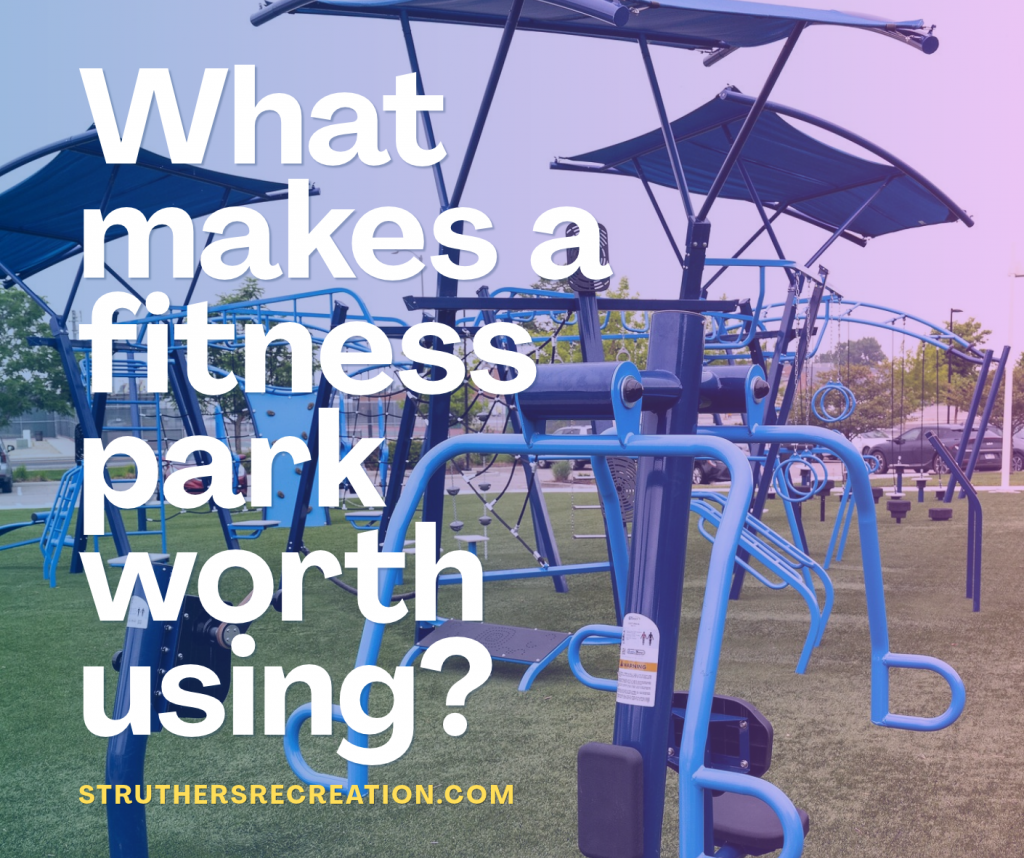
Why outdoor fitness parks go unused
Recent research points to a common problem: equipment alone isn’t enough. Older adults may avoid outdoor fitness areas because they don’t know how the stations work, question whether the equipment fits their abilities, or encounter poor access, limited shade, uncomfortable surfaces and a lack of maintenance.
Location matters, too. A fitness area hidden behind a field or separated from other park activity can feel disconnected. But placing it near walking paths, community centers, playgrounds or other visible destinations can make the space easier to find and more inviting to use. Visibility also supports informal social contact without requiring people to join a formal class.
Programming can make the difference between an installation and a community resource. Introductory classes, walking groups, balance sessions and simple demonstrations give people a reason to visit and the confidence to return. A clear activation plan should be considered during design—not after the ribbon-cutting.
For a broader look at planning considerations, explore Outdoor Adult Fitness parks.
Design for comfort, clarity and different abilities
Older adults aren’t a single user group. Some may be training for strength, while others want to improve balance, mobility, flexibility or everyday function. A well-planned park provides several levels of challenge and lets users choose how they participate.
Prioritize:
- Smooth, compliant routes connecting parking, sidewalks, restrooms and the fitness area
- Stable, shock-absorbing surfaces with enough room for mobility devices and companions
- Handholds, back support and equipment that accommodates different heights and ranges of motion
- A mix of balance, strength, flexibility and low-impact movement stations
- Benches, leaning rails and shaded rest areas near—not far away from—the activity zone
- High-contrast, easy-to-read instructions supported by simple icons
- Drinking water, lighting and convenient access to restrooms
The best layouts also create a logical flow. Users should be able to move from warm-up activities to strength and balance exercises, then to stretching and rest without crossing awkward gaps or navigating crowded equipment.
Research published in 2025 identified surface type, equipment designed for older adults and shady trees as especially important design features. More recent interviews with older adults with functional limitations emphasized comfortable temperatures, natural surroundings, readable information, diverse equipment and consistent maintenance.
Learn more about the health rationale behind these spaces in Fitness for adults. For additional planning ideas, return to Outdoor Adult Fitness parks.
How to design an intergenerational fitness park
An intergenerational fitness park should welcome older adults without labeling the space as “for seniors only.” That means combining age-appropriate equipment with flexible areas that can support parents, teens, caregivers and grandparents together.
Place fitness stations near other community destinations, but avoid creating conflicts with fast-moving play or sports. A nearby playground can help grandparents stay active while supervising children. Open lawn, walking loops and flexible gathering space can support warm-ups, group classes, tai chi, stretching or informal games.
Design for shared participation by including equipment with adjustable challenge, stations that support side-by-side use, and seating positioned for conversation. A grandparent and grandchild may not perform the same exercise, but they can still share a circuit, walk together or pause in the same shaded area.
Community input should shape the final layout. San Francisco’s 2026 Golden Gate Park senior recreation project used multilingual surveys and community meetings to adjust the balance between equipment, open space and shaded seating. That kind of feedback can reveal practical needs that a plan view won’t show.
How outdoor fitness parks support social connection
Social connection often begins with small, repeatable encounters: greeting a familiar neighbor, joining a walking group or asking how to use a station. Parks can support these moments when they provide comfortable places to pause and a reason to return.
Use a combination of individual and group-oriented features. Individual stations support autonomy, while open space supports classes and community programming. Seating should face the activity area rather than turn users away from it. Shade, water and nearby paths extend visits beyond a quick workout.
The park’s identity matters as well. Welcoming signs, inclusive language and clear instructions can reduce uncertainty. A schedule board can promote recurring activities, while partnerships with senior centers, health providers, recreation departments and local organizations can help build consistent attendance.
A successful fitness park is not just a collection of equipment. It is an accessible, legible and comfortable public setting where people can move at their own pace, see others, and feel that they belong. When designers address barriers, support different abilities, plan for intergenerational use and activate the space through programming, outdoor fitness becomes part of daily community life.
To discuss a fitness park designed around your residents and goals, Let's talk
