Pre-K Playground Design: What Every Daycare Playground Needs
A Preschool Playground should do more than fill an outdoor area. It should help young children move, communicate, imagine, test new skills, and build confidence while giving educators a clear view of the entire play environment.
For children ages 2 to 5, outdoor play supports physical development, attention, language, and social-emotional learning. The right design turns everyday recess into an extension of the classroom—one where children can climb, balance, pretend, cooperate, and make choices at their own pace.
What Does a Daycare Playground Need?
A strong daycare playground starts with the needs of the children and staff who will use it every day. Before choosing equipment, consider the age range, enrollment, available space, supervision patterns, local licensing requirements, and the goals of your early learning program.
Here are the essentials:
- Age-appropriate play equipment: Preschool-age children need equipment scaled for their size, abilities, and developmental stage. Low platforms, small slides, crawl spaces, balance features, interactive panels, and imaginative play areas create graduated challenges without overwhelming young users.
- Clear sightlines: Staff should be able to see and hear children throughout the play area. Avoid tall visual barriers, hidden corners, and layouts that force teachers to supervise from one fixed position.
- Compliant surfacing and use zones: Protective surfacing should be selected, installed, and maintained according to the equipment’s fall height and applicable requirements. Each structure also needs enough clear space for children to move and exit without conflicting traffic patterns.
- Inclusive access: Paths, entry points, ground-level activities, transfer options, and sensory-rich features help more children participate in shared play. Inclusion should be part of the site plan from the beginning, not an add-on after equipment is selected.
- Shade and rest areas: Young children need places to pause, hydrate, cool down, and regroup. Shade can cover active play, seating, pathways, and quieter areas rather than only the main structure.
The Preschool Playground Planning guide can help your team organize these decisions before design work begins.
How Pre-K Play Supports Development
The best outdoor environments offer a mix of movement, discovery, and social interaction. Climbing and balancing help children practice coordination, strength, body awareness, and motor planning. Slides, ramps, bridges, and crawl-through elements invite children to sequence actions and solve manageable physical problems.
Play also builds social skills. A pretend storefront, playhouse, musical element, or shared sensory panel gives children reasons to talk, negotiate roles, take turns, and cooperate. These everyday interactions help children practice patience, communication, empathy, and self-regulation.
The CDC notes that outdoor play gives children opportunities to jump, run, climb, explore new sights and sounds, and practice skills connected to learning, language, and emotions. A playground designed with varied activity types gives those benefits more room to happen naturally.
For additional ideas, review the GameTime Preschool Daycare Playground Equipment collection for developmentally appropriate play options.
Design a Daycare Playground Around Activity Zones
A daycare playground works better when it isn’t one crowded equipment cluster. Divide the site into connected zones with different energy levels and purposes.
Active movement
Use climbing, sliding, balancing, running, and wheeled-play opportunities to support gross-motor development. Keep high-movement routes separate from quiet areas and provide enough room for children to enter and exit equipment without crossing through another activity.
Imaginative and social play
Playhouses, themed panels, gathering spaces, and role-play elements encourage children to create stories together. These features can also support classroom themes, from community helpers to nature and transportation.
Sensory and quiet discovery
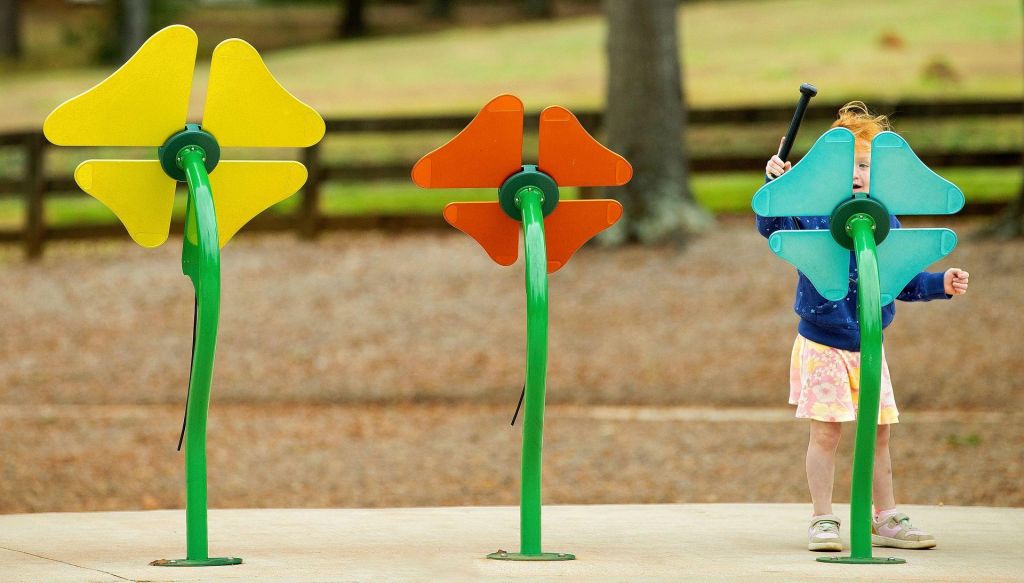
Musical components, tactile panels, gardens, sand or water activities, and nature-based features give children different ways to engage. A quieter edge of the playground can help children who need a break from busy movement while remaining visible to staff.
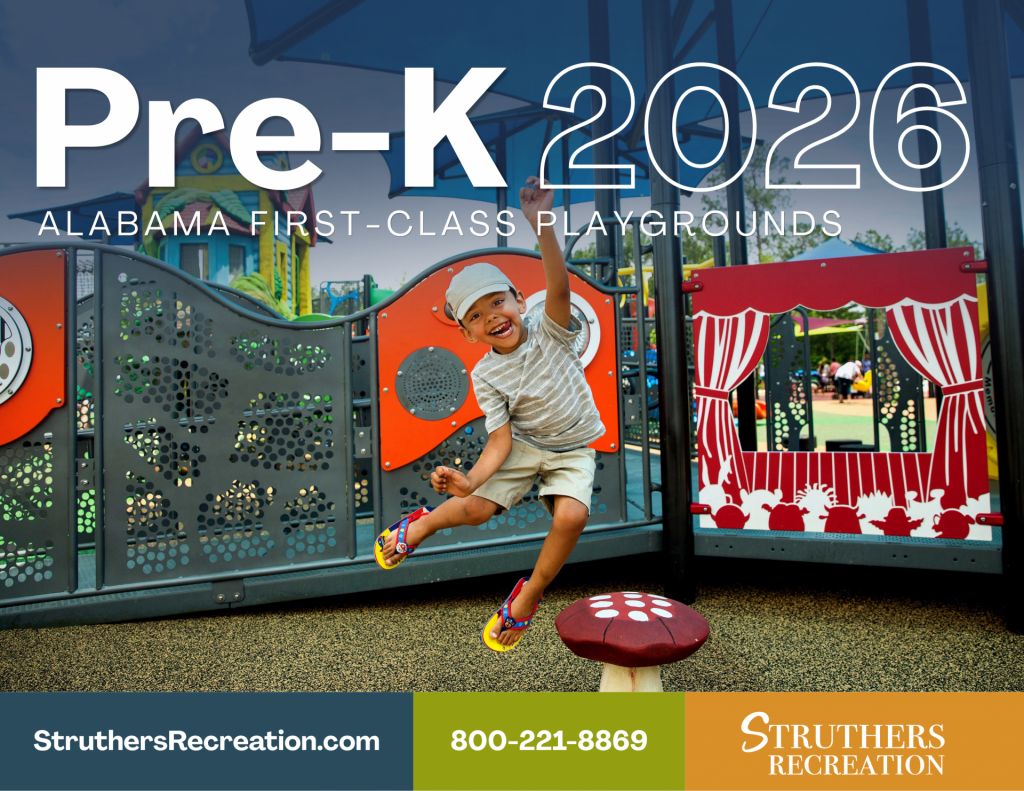
The Struthers Recreation Pre-K 2026 First-Class Playgrounds brochure offers another look at how these elements can come together in a complete early learning environment.
Plan for Supervision, Weather, and Maintenance
A compliant layout is only one part of a successful playground. Staff need clear supervision procedures, routine inspections, and a maintenance plan that addresses equipment, surfacing, drainage, gates, shade structures, and loose materials.
The U.S. Consumer Product Safety Commission recommends age-appropriate design, protective surfacing, thoughtful layout, adult supervision, and regular maintenance. Its current handbook distinguishes preschool-age children as ages 2 through 5 and emphasizes that equipment type, scale, and arrangement should reflect those developmental differences.
Weather planning matters, too. Include shade, drinking water access, and opportunities for breaks. Programs should also account for heat, sun exposure, rain, and changing surface conditions when scheduling outdoor play.
A thoughtful Daycare Playground gives children room to move, imagine, connect, and grow while helping teachers supervise and extend classroom learning outdoors. Start with age-appropriate equipment, inclusive access, varied activity zones, compliant surfacing, shade, and a realistic maintenance plan. Then shape the space around the children your program serves. View Our Pre-K Brochure